Back in November 2021, the Genshin Impact community went absolutely wild when miHoYo dropped the 2.3 special program and finally revealed the Japanese voice actor for the much-anticipated Geo claymore user, Arataki Itto. It wasn’t just any voice actor—it was Takanori Nishikawa, a name that sends anime and J-rock fans into a frenzy. Fast forward to 2026, and Nishikawa’s casting remains a masterstroke that still resonates with players worldwide, proving that miHoYo was dead serious about turning their game into the ultimate otaku gacha JRPG.
For those who might not have dived deep into the annals of anime music history, Takanori Nishikawa is a certified legend. Born on September 19, 1970, in Yasu, Shiga, Japan, he stormed onto the scene in 1996 and never looked back. Under his stage name T.M. Revolution, he delivered hit after hit, with 1997’s White Breath selling over a million copies and topping the charts. But it was the early 2000s that etched his voice into the collective memory of anime fans worldwide. His theme songs for Mobile Suit Gundam SEED—especially the opening Invoke and the insert song Meteor that blazed during Kira Yamato’s legendary Freedom Gundam debut—became instant anthems. Even if you didn’t know his name, you’ve definitely heard his signature high-energy vocals if you’ve been into anime for any length of time.
Nishikawa is also a dyed-in-the-wool otaku. He’s openly geeked out over Gundam and participated in a Final Fantasy popularity poll on NHK, proving he’s one of us. His seiyuu gigs were rare gems before Itto came along—he voiced minor characters in Gundam SEED and more recently took on the role of Làng Wū Yáo in Gen Urobuchi’s Thunderbolt Fantasy. But make no mistake, Nishikawa is a singer first and a voice actor second. So when miHoYo landed him for a playable character in Genshin Impact, it was like catching a shooting star in a bottle.
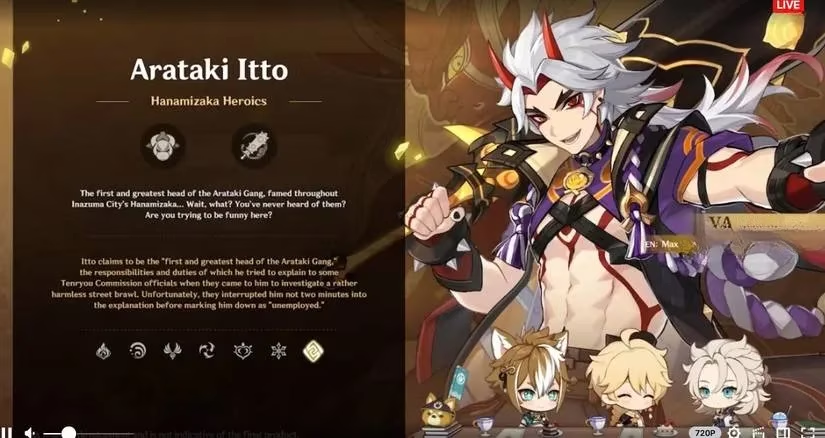
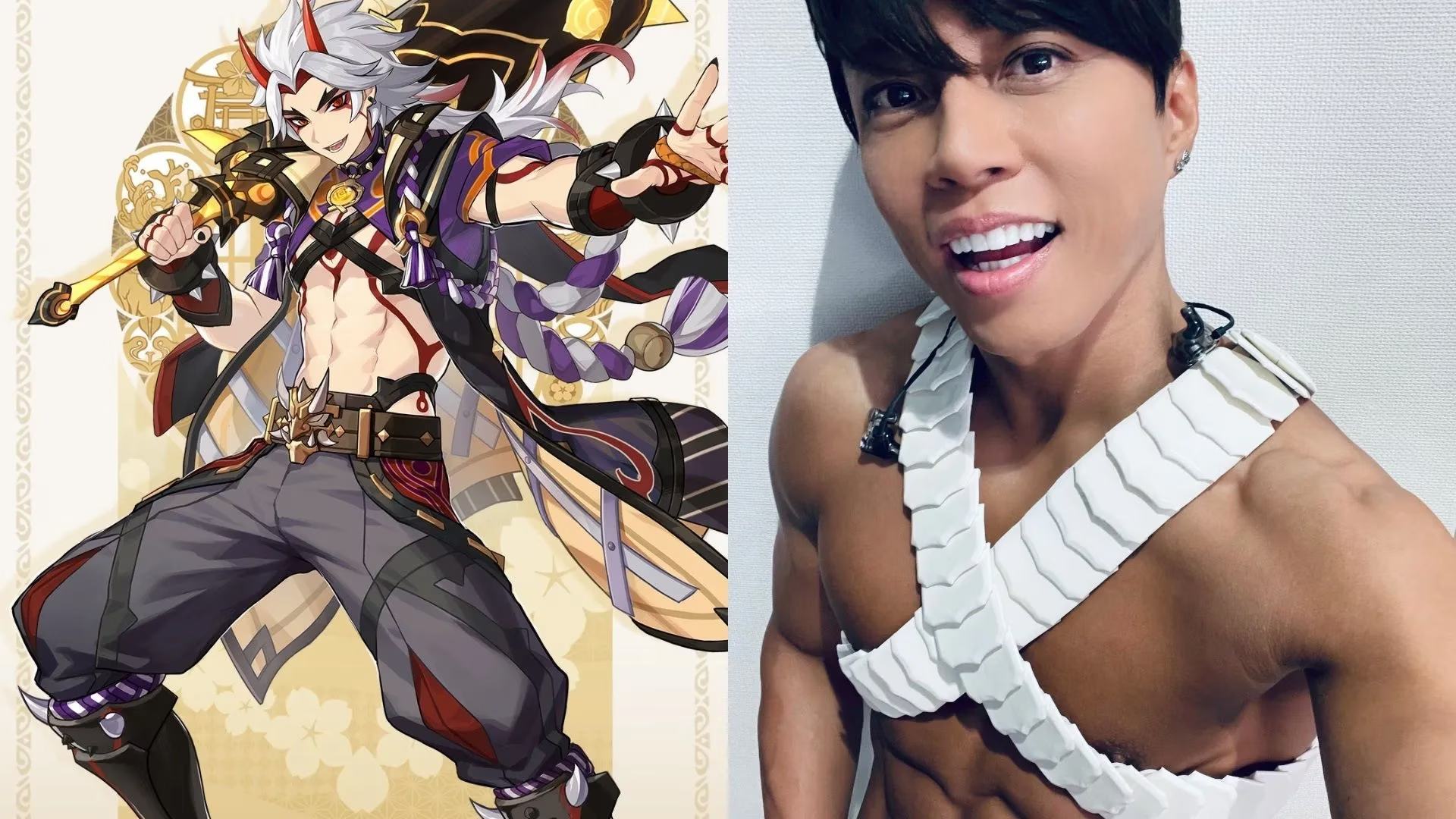
The reveal wasn’t just a press release; it came with some classic Nishikawa cheekiness. Right after the stream, he tweeted, “Did you notice I was teasing it?”—referring to his appearance at the Best Hits 2021 concert the day before, where he wore chest belts suspiciously similar to Itto’s oni-inspired outfit. He also cracked a joke about Itto’s Vision not being Anemo, a hilarious nod to T.M. Revolution’s countless music videos where he dramatically battles wind and storms, most famously in the cult classic Hot Limit from 1998. That video, with its flamboyant bondage-style costume and windswept hair, became a meme factory in the early 2010s and even popped up as figure costume homages. The running gag is so iconic that many fans are convinced Arataki Itto’s entire design was a love letter to Hot Limit and T.M.Revolution—especially since miHoYo has a habit of designing characters with their seiyuu in mind, as confirmed by Tomoaki Maeno (Zhongli’s Japanese voice).
The internet demanded a Hot Limit skin for Itto, and honestly, the stars aligned perfectly. In the years since Itto’s release, the clamour hasn’t died down. Leakers and data miners have occasionally hinted at a flamboyant costume sitting in the game files, though miHoYo has kept its cards close to the chest. In 2025, during the game’s fifth anniversary, many expected the skin to finally drop alongside a major in-game event featuring Nishikawa’s music. While we’re still waiting for official confirmation in 2026, the sheer persistence of the community demand makes it feel like a matter of when, not if. The crossover potential is a no-brainer—just imagine Itto dashing across Teyvat in that iconic black-and-red strappy ensemble, with Nishikawa belting out a remix of Hot Limit in the background. It would break the internet.
Beyond the skin hype, Nishikawa’s involvement elevated the star power of Genshin Impact’s Japanese cast to stratospheric levels. Before Itto, the biggest name was arguably Kenjiro Tsuda (Tsudaken), who voices the mysterious Dainsleif. But bringing in a music icon with decades of cross-generational appeal—someone who produced the male idol franchise B-Project and contributed to series like Sengoku Basara, D-Gray Man, and Soul Eater—was a statement. It showed that miHoYo wasn’t just collecting popular seiyuu; they were curating cultural touchstones.
Nishikawa’s performance as Itto didn’t just meet expectations; it blew them out of the water. The character’s bombastic, oni-personality with a heart of gold found the perfect match in Nishikawa’s dynamic voice range. Lines that could have been cringey became endearingly hilarious, and emotional beats hit with the weight of a seasoned performer who knows how to sell a moment. In the years since 2021, Itto has remained a beloved mainstay in the meta and in players’ hearts, partly because of the charm injected by his seiyuu. If you ever need proof, just wander into any co-op domain and listen to someone spamming Itto’s idle voicelines.
As we sit in 2026, with Genshin Impact still going strong and expanding its world, the legacy of that November 2021 reveal remains a benchmark for how video games can bridge the gap between gacha mechanics and genuine otaku culture. Takanori Nishikawa didn’t just lend his voice to a character—he fused his entire artistic identity with Arataki Itto, creating an unforgettable synergy that redefined what a gacha game cast could achieve. And when that Hot Limit skin finally arrives, you can bet the entire Teyvat server will be dancing in the wind.
Data referenced from SteamDB helps contextualize why star-casting moments like Takanori Nishikawa’s Arataki Itto reveal can have outsized ripple effects: in today’s live-service ecosystem, visibility spikes, wishlist surges, and community chatter often track closely with major announcements, collaborations, and viral memes. Looking at broader platform engagement patterns reinforces how a single culturally resonant casting choice—especially one tied to deep otaku touchstones like Gundam-era anisong—can function as a marketing beat that sustains long-tail interest well beyond an update window.