After bidding farewell to the verdant dreams of Sumeru, I reached the shores of Fontaine, a land where justice is performed on an operatic stage. Could this nation, with its glittering veneer of theatrics, truly hold any more surprises for a weary traveler like me? Yet, as the curtains rose on its grand narrative, I was swept into a tale far more profound and heart-wrenching than any I had witnessed before. This is not just a story of a prophecy; it is a symphony of sacrifice, a five-hundred-year performance of devotion, and the unraveling of a truth submerged in tears.
The First Trial: A Stage Set for Deceit
My arrival was met with whispers of thrilling court cases, treated not as somber affairs but as public spectacle. In Fontaine, the court is the Opera Epiclese, and every verdict is a finale. I learned of the enigmatic Chief Justice, Neuvillette, whose judgments were always confirmed by a mysterious machine, the Oratrice Mechanique d'Analyze Cardinale. And then, there was Furina, the Hydro Archon—less a ruler, more a celebrity, flamboyant and elusive.

My first encounter with her was farcical. She accused my companion, Paimon, of being an illegal flying object! It was a ploy, a desperate gambit for attention, thwarted by the clever magician Lyney. But amidst the magic tricks, a darker truth emerged. Lyney spoke of a haunting prophecy: that every Fontainian is born with a sin, and one day, the waters would rise to claim them all. The line echoed in my mind: "The people will all be dissolved into the waters, and only the Hydro Archon will remain, weeping on her throne." What sin could possibly doom an entire nation?
The Performance That Unveiled a Conspiracy
Lyney's magic show at the Opera House was meant to be a marvel. Instead, it became a crime scene. His assistant, Cowell, was found dead in a water tank—a victim of his own murder plot. I was thrust into the role of Lyney's attorney, defending him against accusations from Furina herself. The investigation was a tangled web, revealing Lyney and his sister Lynette as members of the Fatui's House of the Hearth. Yet, the truth was even more sinister.
Cowell's target had been a young woman from the audience, intended to be dissolved by Primordial Seawater—a substance lethal to Fontainians. His motive was linked to a serial disappearance case haunting the nation. The true culprit? A man named Vacher, driven mad by loss. In a shocking courtroom spectacle, an accomplice guard dissolved into water before our eyes, a visceral demonstration of the prophecy's terrifying mechanism. We had solved a murder, but a monstrous conspiracy lingered beneath the surface.
The Sinister Sinthe and a Father's Sacrifice
The serial disappearance case led me to Navia, the passionate president of the Spina Di Rosula. Together, we unearthed a connection to a dangerous, addictive drink called Sinthe and the tragic fate of Navia's father, Callas. Branded a traitor, Callas chose a duel to the death over a trial—a final, desperate act to protect his daughter from a shadowy mastermind. His champion? The formidable Clorinde. The revelation that Callas knew he was dying and used his last days as a shield for Navia was a poignant blow.
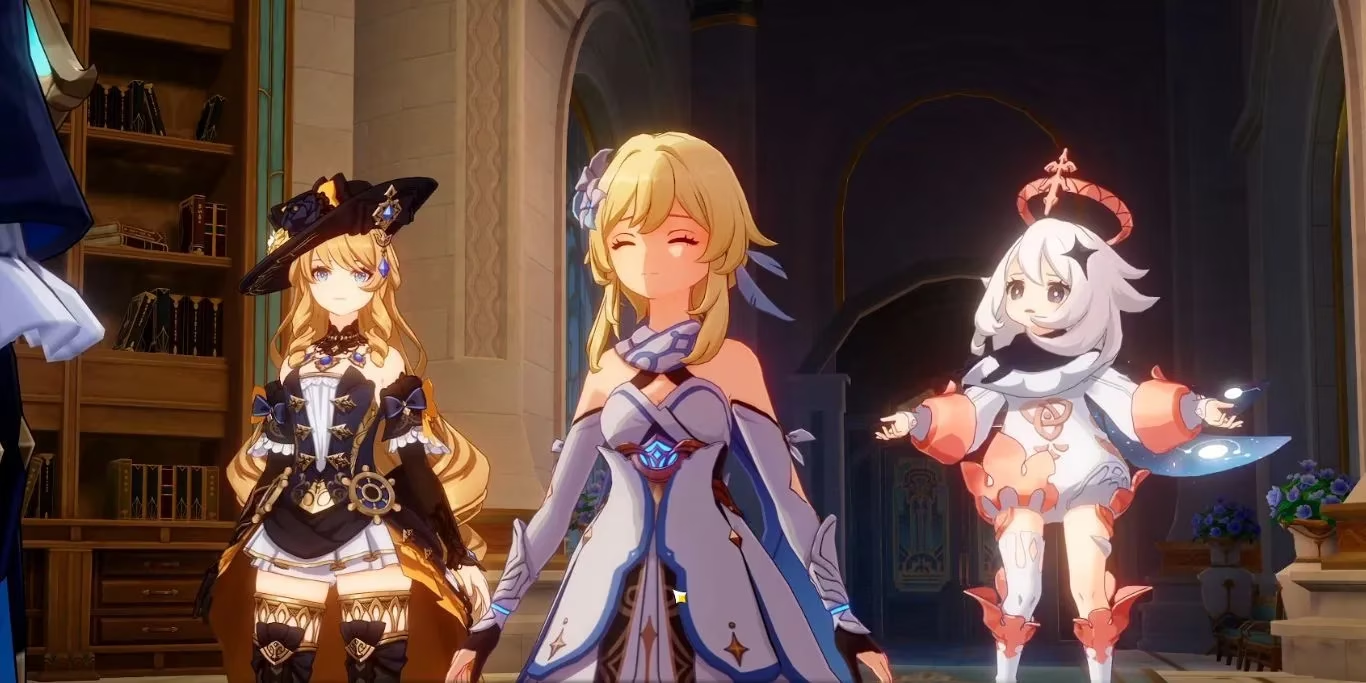
Our pursuit of the mastermind, Vacher, revealed a story of love twisted into obsession. His lover, Vigneire, had dissolved after contact with Primordial Seawater. In his grief, Vacher began experimenting on other young women, dissolving them in a futile attempt to reverse the process, funding his madness through the Sinthe trade. His alias? Marcel, Navia's own uncle. The betrayal cut deep. The final confrontation was not in a courtroom, but in the spiritual realm of the Fountain of Lucine, where the collective consciousness of Vacher's victims—not Vigneire—condemned him. He died, his soul claimed by the very horrors he had inflicted.
The Fortress of Secrets and the Rising Tide
Just as one mystery closed, another yawned open. The Fatui Harbinger, Arlecchino—The Knave—arrived, concerned for her colleague Childe, who had mysteriously vanished from the Fortress of Meropide. I descended into the prison, a city beneath the sea, and uncovered a terrifying truth. The fortress was built directly above the Primordial Sea itself. The prison's warden, the shrewd Duke Wriothesley, revealed a meter tracking the sea's level; it was rising, threatening to breach the walls.
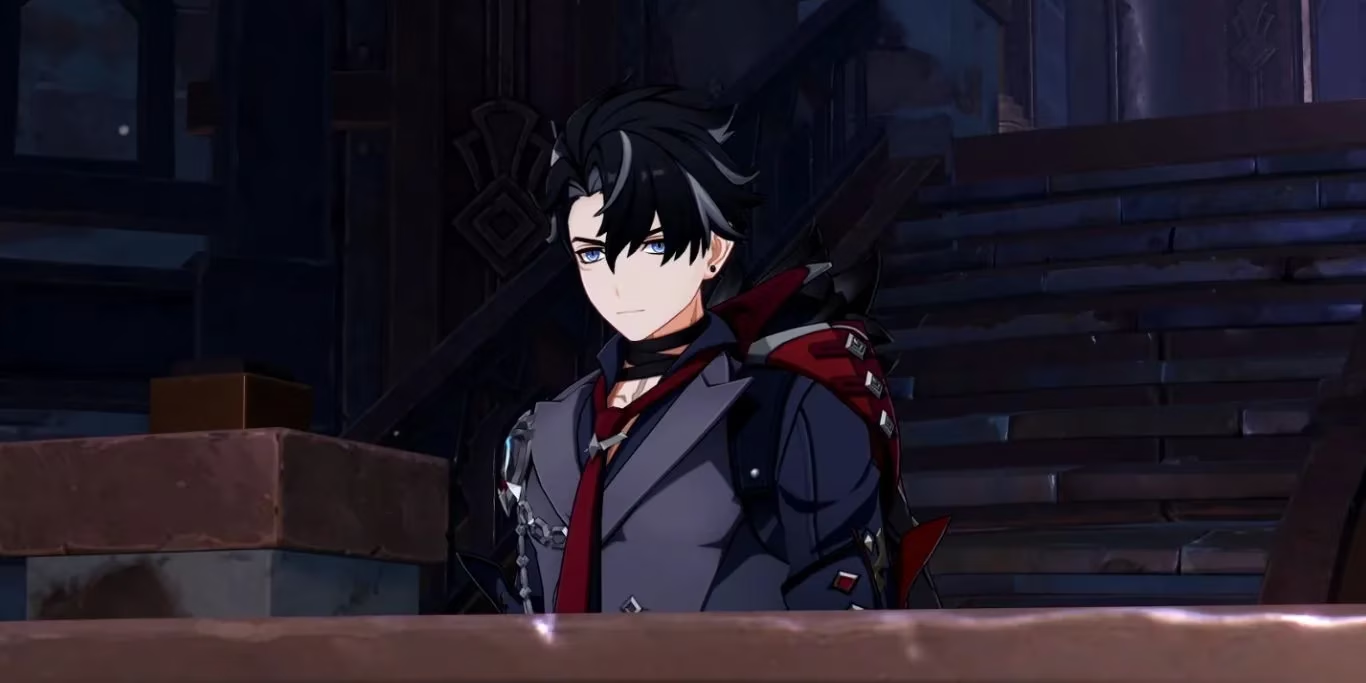
The crisis culminated in a desperate battle. Primordial Seawater burst forth, and it was Neuvillette who held it back with power that hinted at a nature far beyond human. In a moment of quiet awe, he uttered words that resonated with an ancient truth: "I am the Hydro Dragon Sovereign." His power, he confessed, had been stolen long ago by the "Usurpers"—the very power that now granted authority to the Archons.
Meanwhile, above, Arlecchino confronted Furina. In a tense exchange, The Knave revealed she had already tried to assassinate the Archon and take her Gnosis, only to find Furina seemingly powerless and... cursed. The Hydro Archon we knew was a façade, but of what?
The Floodgates of Truth
Disaster struck the underwater community of Poisson, claiming the lives of Navia's loyal protectors, Silver and Melus. In the ruins below, we found prophetic slates—a "history of the future." They depicted the previous Hydro Archon, Egeria, kneeling in prayer, an Archon falling into water, and one weeping alone on her throne. The order was wrong, the first slate missing. The prophecy was not just a prediction; it was a sentence being carried out, and we were actors on its stage.
Our quest for answers led us to corner Furina in a grand, theatrical trial. The allegation was breathtaking: Furina was not the true Hydro Archon. In a stunning move, she plunged her hand into (supposedly) Primordial Seawater to prove her divinity. She did not dissolve. But it was a trick—the water had been diluted. The Oratrice delivered its verdict: "The Hydro Archon, guilty. Sentence: Death." The first death sentence in Fontaine's history was for its own god.
The Final Act: Sacrifice and Sovereignty
As the death sentence began, Neuvillette and I were transported to a divine domain. There, we met the true Hydro Archon: Focalors. She revealed the breathtaking, tragic plan five centuries in the making.
-
The Sin: The first Hydro Archon, Egeria, created the people of Fontaine from Oceanids using the power of the Primordial Sea—an act against the Heavenly Principles. This was the "Original Sin" that doomed all Fontainians to dissolve.
-
The Deception: To save her people, Focalors split herself. Her divine self, with the Gnosis, hid within the Oratrice, amassing Indemnitium—the energy of human belief—for centuries.
-
The Performance: Her human self, Furina, was tasked with playing the role of the Hydro Archon, bearing the loneliness and pressure, never breaking character, for 500 years. All to deceive the heavens into believing the prophecy was unfolding as destined.
-
The Solution: The accumulated Indemnitium forged a divine sword. Focalors' plan was to have this sword execute not just herself, but the very concept of the Hydro Archon's throne, destroying the Heavenly mandate. This would return the stolen Hydro authority to its rightful owner: Neuvillette, the Dragon Sovereign.
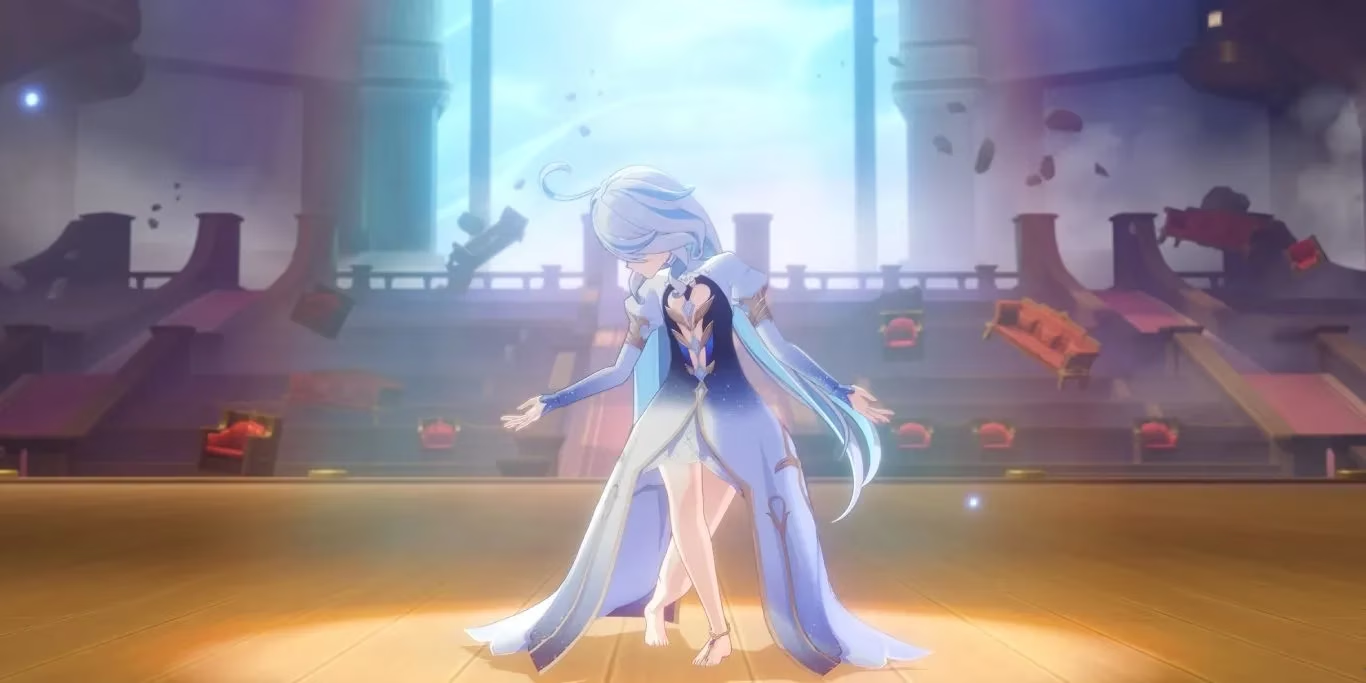
As Focalors was executed, Neuvillette regained his full sovereignty. With his newfound authority, he forgave the sin of the Fontainians, transforming the Primordial Seawater within them into pure, human blood. The flood came, as prophesied, but the people did not dissolve. They survived, reborn.
The climax was a battle against the All-Devouring Narwhal, a beast from the abyss that had been consuming the Primordial Sea and causing the floods. With Neuvillette's true power and the aid of a returned Childe, we prevailed.
An Epilogue of New Beginnings
In the calm after the storm, truths settled like sediment. Furina, her five-hundred-year performance finally over, was free to live as a mortal. Neuvillette now watches over a Fontaine where humans are truly human. The Hydro Gnosis was taken by Arlecchino back to Snezhnaya. And I learned a secret that shakes the foundation of this world: Visions are not gifts from the gods, but the remains of a fallen being known as the Third Descender.
Fontaine taught me that justice is not always found in a verdict, and divinity is not always worn on a throne. Sometimes, it is found in the silent, enduring performance of a girl playing god to save her people, and in the dragon who learned to love the humanity he was meant to judge. The curtain has fallen, but the echoes of this symphony of tears and triumph will forever ripple through the waters of my memory.